
Stan within a Stan: Otherworldly Karakalpakstan
In the quiet corners of the world, some places feel less like geography and more like a fever dream. For those of us who find ourselves drawn to the "Stans," the allure is often the hidden, the overlooked, and the raw. While the turquoise domes of Samarkand are undeniably breathtaking, there is a different kind of beauty waiting further west, in a land known as a "Stan within a Stan": Karakalpakstan.
To visit Karakalpakstan is to step off the edge of the map. It is a place of vast, bruising horizons and a hauntingly beautiful landscape that challenges every preconceived notion of what Uzbekistan "should" be. For the modern nomad, it is the ultimate frontier.
The Louvre in the Desert
.

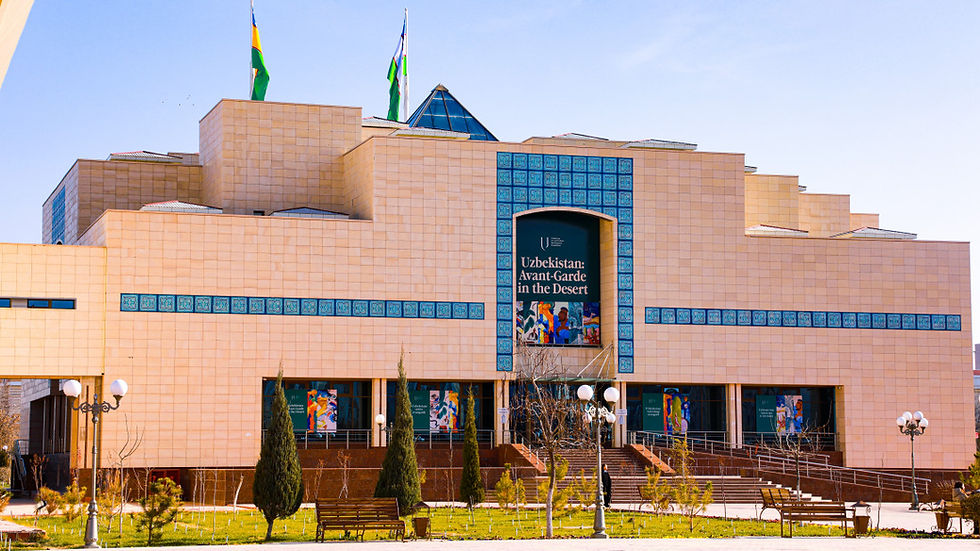
My introduction to this region always begins in Nukus, a city that feels remarkably remote, yet holds one of the world's most improbable treasures: the Savitsky Museum. It is often called the "Louvre in the Desert," but that almost feels too polished for what it truly is—an act of pure defiance.
During the Soviet era, when "subversive" art was banned, Igor Savitsky risked everything to rescue thousands of avant-garde canvases, hiding them in this isolated desert outpost. Walking through these halls doesn't feel like visiting a gallery; it feels like being let in on a secret. You aren’t just looking at paint on canvas; you are witnessing a collection of souls that were saved from the fire. For the traveler who seeks depth over distance, this is where the heart begins to beat a little faster.
The Ghost Fleet of Muynak
Leaving the curated halls of Nukus, the road toward Muynak is a transition into a surrealist painting. Once a thriving port city on the shores of the Aral Sea, Muynak now stands miles from the receding water.
There is a profound, quiet elegance to the "Ship Graveyard"—rows of rusted fishing vessels settled into the sand like skeletal monuments. Standing among these ships as the sun sets, casting long, metallic shadows over the desert floor, is a grounding experience. It is a story of environmental change, yes, but also of the stark, cinematic beauty that remains when the world shifts. It is a place that demands you sit, watch, and reflect.
A Dawn Like No Other
To truly understand the Aral, you have to stay long enough to watch the sky change. There is a specific silence that exists on the Ustyurt Plateau, a silence so deep it feels like a physical presence.
Before dawn, the sky shifts from a deep indigo to a pale, shimmering violet. As the sun finally crests over the horizon, the light catches the salt-crusted shores, turning the landscape into a glitter of white and blue. In these early hours, if you are still enough, you might witness the unexpected: a flight of pink flamingos migrating across the alkaline lakes. It is a flash of vibrant, living color against a monochrome world, a moment of pure, unscripted magic.
Ancient Sentinels in the Sand
As you move back toward the modern world, the Elliq-Qala, the "Fifty Fortresses," rise out of the red sands like jagged mud-brick crowns. These ruins are over 2,000 years old, yet they feel as though they are still guarding the horizon. Climbing the ramparts of Ayaz-Kala, looking out across the Kyzylkum Desert, you realize that the Silk Road was never just a path; it was a testament to human endurance.
At SilkNomads, we find that our travelers aren't looking for the familiar. They are looking for the frontier. Karakalpakstan is for the soul that understands that the most meaningful journeys don't happen in the centers of the world—they happen at the edges.

Comments